You're Probably Making These 5 Pool Safety Mistakes — Here's How to Fix Them
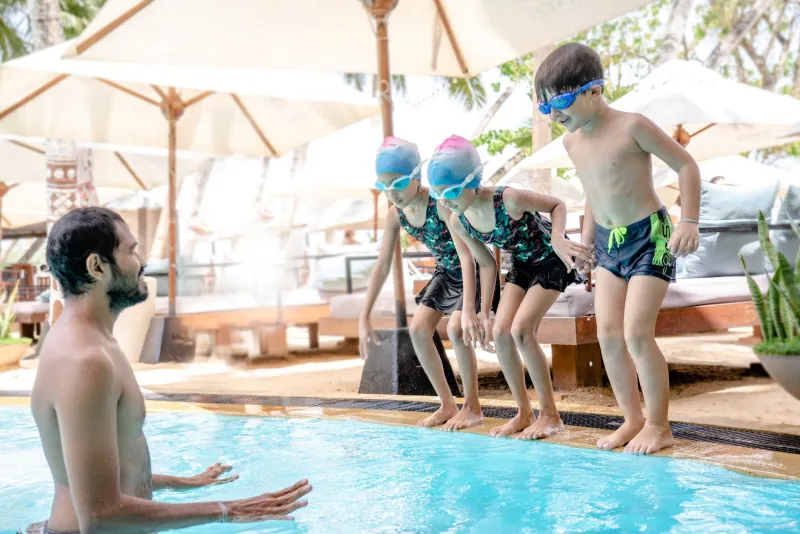
Pool days are supposed to be the highlight of any resort vacation. And for the most part, they are. But every year, preventable water incidents remind us that a relaxed attitude and a crowded resort pool can be a risky combination — especially for families with young children.
The good news? Most pool safety mistakes aren't the result of carelessness. They're the result of misinformation, misplaced confidence, or simply not knowing what to watch for. Fix the knowledge gap, and you can genuinely relax while keeping your family safe.
Here are five of the most common pool safety mistakes families make at resorts — and exactly what to do instead.
Mistake #1: Treating Floaties and Inflatable Toys as Life-Saving Devices
This one is so widespread it deserves to be at the top of every pool safety conversation. Arm floaties, inflatable rings, and pool noodles are toys. They are not Coast Guard-approved personal flotation devices, and they should never be treated as a substitute for a properly fitted life jacket or active adult supervision.
The problem is that these items create a false sense of security. A child wearing arm floaties can still tip forward and struggle to right themselves. An inflatable ring can flip. A pool noodle provides zero protection if a child lets go or slides off. Parents who believe their child is "safe" because they're wearing floaties are more likely to turn their attention elsewhere — and that's when accidents happen.
What to do instead: If your child isn't a confident swimmer, invest in a U.S. Coast Guard-approved life jacket that fits their weight and size. These are specifically engineered to keep a child's head above water and are rigorously tested. Use pool toys for what they are — fun — and keep them separate from your safety strategy.
At Shiroyama Pool & Resort, our staff are trained to gently remind guests of this distinction. We encourage all families with young swimmers to check in with our lifeguards about appropriate flotation options for their children's skill levels.
Mistake #2: The "I'm Watching" Watch That Isn't Really Watching
Here's a scenario that plays out at resort pools across the country every single day: a parent sits at the pool's edge, scrolling their phone with one eye on the water. They'd tell you they're watching their kids. And they believe it.
But distracted supervision is not supervision. Drowning doesn't look like the movies — there's no splashing, no yelling, no dramatic flailing. According to the American Red Cross, drowning is typically silent and fast, often occurring in under 60 seconds. A 10-second glance at a notification can be too long.
This is especially tricky at busy resort pools, where the visual noise of dozens of splashing, laughing kids can make it genuinely hard to spot a child in distress.
What to do instead: Designate a dedicated water watcher for each swim session — one adult whose sole job is active visual supervision, with no phone, no book, and no conversation that takes their eyes off the water. Rotate this role every 15–20 minutes to prevent attention fatigue. When the water watcher needs a break, kids get out of the pool. Full stop.
Resort lifeguards are a critical safety layer, but they're responsible for an entire pool of guests. They are not a replacement for parental supervision.
Mistake #3: Assuming Your Kid's Swim Lessons Mean They're Safe in a Resort Pool
Swim lessons are one of the most valuable things you can give your child. The CDC has found that formal swim instruction can reduce childhood drowning risk by as much as 88% in children ages 1–4. But lessons teach skills in a controlled, familiar environment — a resort pool is neither of those things.
Resort pools often have features that home or community pools don't: varying depths, strong jet currents, crowded conditions, waterslide entry zones, and unfamiliar layouts. A child who swims confidently at their local rec center may be genuinely disoriented in a new aquatic environment, especially if they're excited, tired, or distracted.
What to do instead: Before your kids jump in, do a quick orientation walk around the pool together. Point out the depth markers. Identify the shallow end and the deep end. Show them where the steps are. Ask them where they should and shouldn't swim based on their skill level. This takes about three minutes and dramatically reduces the chance of a child accidentally wandering into water that's over their head — literally.
Also: remind kids that resort pools often have stronger jet systems and more foot traffic than they're used to. Adjust expectations accordingly.
Mistake #4: Skipping Sunscreen Reapplication (And Paying for It Later)
Okay, this one isn't a drowning risk — but it absolutely qualifies as a pool safety mistake because it can derail your entire vacation and cause genuine harm. Severe sunburn in children has been linked to increased lifetime risk of skin cancer, and it's almost entirely preventable.
The mistake families make isn't skipping sunscreen at the start of the day. Most parents apply it before heading to the pool. The mistake is not reapplying it — and not accounting for how quickly water exposure degrades even "water-resistant" formulas.
The American Academy of Dermatology recommends reapplying broad-spectrum SPF 30 or higher every two hours, and immediately after swimming or toweling off. Most families reapply once, if at all.
What to do instead: Set a phone alarm for every two hours of pool time. Keep your sunscreen in your pool bag where you'll actually see it, not buried in a beach tote. For young children, look for mineral-based sunscreens with zinc oxide or titanium dioxide, which tend to be gentler on sensitive skin and offer reliable protection.
Also worth noting: UV exposure is strongest between 10 a.m. and 4 p.m. Building in a shaded break during peak hours — a resort lunch, a nap, some time in a covered cabana — is a smart habit that keeps everyone more comfortable and better protected.
Mistake #5: Not Knowing Where the Nearest Emergency Resources Are
This might be the least glamorous item on this list, but it could be the most important. When families arrive at a resort, they're thinking about check-in, finding their room, and getting to the pool. Almost nobody thinks: "Where is the nearest AED? Where are the lifeguard stations? What's the resort's emergency protocol?"
In a genuine emergency, those 30 seconds spent figuring out where to go can matter enormously.
What to do instead: When you arrive at the pool for the first time, take 60 seconds to look around. Identify the lifeguard stations. Note where the first aid kit is located (most resort pools have them posted near the entry). If you're traveling with a child who has a medical condition — asthma, a heart condition, a seizure history — tell a lifeguard before your first swim. They need to know.
At Shiroyama Pool & Resort, our lifeguard team is certified in CPR, first aid, and emergency water rescue. Our AEDs are clearly marked and accessible throughout the pool area. We also encourage guests to ask our staff any safety questions before or during their pool time — there are no silly questions when it comes to keeping your family safe.
The Bottom Line
Pool safety isn't about being anxious or hovering over your kids every second. It's about building smart habits that let you genuinely relax because you've already taken care of the important stuff. Know the risks, fix the blind spots, and then enjoy every single sun-soaked minute of your resort vacation.
You came here to make memories. A little preparation makes sure all of them are good ones.