Cold Water Complaints and Sweat-Soaked Sunbathers: The Science Behind Resort Pool Temperature Disagreements
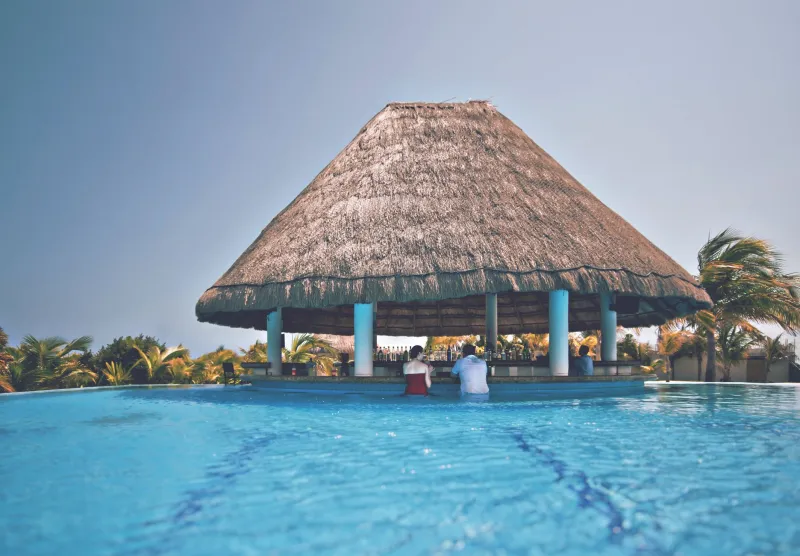
You've been on the pool deck for two hours. You're warm, maybe a little sun-baked, and finally ready to slide into the water. You dip a foot in and — perfect. Absolutely perfect. Then your travel companion does the same and immediately recoils like they've touched liquid ice. Same pool. Same moment. Completely opposite reactions.
This isn't just a quirk of human drama. There's real science behind why resort pool temperatures feel so wildly different from one person to the next, and it's something the team here at Shiroyama Pool & Resort thinks about more than most guests ever realize.
What's the "Right" Temperature, Anyway?
The American Red Cross recommends recreational pool temperatures between 78°F and 86°F, a range that sounds comfortably narrow until you realize that's an eight-degree window — and eight degrees is enormous when it comes to water. Most resort pools hover somewhere in the low-to-mid 80s as a general compromise, but even that number becomes almost meaningless once you factor in how differently individual bodies register temperature.
The baseline human core body temperature is around 98.6°F, but skin temperature varies significantly by person, time of day, and activity level. When you step into 82°F water, your nervous system isn't measuring the absolute temperature — it's measuring the difference between that water and your skin. That gap is what triggers your "cold" or "warm" response.
Your Body Composition Is a Bigger Factor Than You Think
Here's something most people don't know: body fat is an excellent insulator. Guests with higher body fat percentages tend to feel more comfortable in cooler water because their insulating layer slows heat transfer away from the body's core. Leaner swimmers, by contrast, often feel the chill more acutely, especially in the first few minutes of submersion.
Muscle mass plays a role too. Active muscle tissue generates heat, which is why someone who just finished a workout might slide into the pool and find it refreshing while someone who's been lounging in the shade all morning finds the same water uncomfortably cold.
Age is another variable. Children have a higher surface-area-to-body-mass ratio than adults, which means they lose body heat to water faster — one reason kids tend to shiver after extended pool time even when they swear they're not cold. Older adults, on the other hand, often have reduced circulation in their extremities, which can make even moderately warm water feel chilly.
The Sun Exposure Effect
One of the most underappreciated factors in the temperature wars is how long you've been sitting in direct sunlight before getting in. Spend an hour on a sun-baked lounge chair and your skin surface temperature can climb well above your normal baseline. When you finally enter the water, even a pool at 84°F can feel shockingly cool compared to your sun-warmed skin.
This is why the same guest who complained about the pool being cold at 10 a.m. might be perfectly happy in it by 2 p.m. — not because the pool temperature changed, but because they did.
Resort staff are well aware of this pattern. "We get more temperature complaints in the morning than any other time," says one aquatics manager at a Florida-based resort. "By afternoon, most people have acclimated — both to the water and to the heat of the day. The pool hasn't changed. The guests have."
The Acclimation Window
Here's a piece of practical wisdom worth holding onto: most people need between three and seven minutes to thermally acclimate to pool water. The discomfort of those first few minutes is your cold receptors firing intensely, but they fatigue quickly. If you wade in gradually rather than jumping straight in, your body adjusts faster and the experience feels much more comfortable overall.
The guests who insist the pool is "way too cold" are often the ones who jumped in, felt the shock, got out, and never gave their bodies a chance to settle. It's not a character flaw — it's just biology working against impatience.
How Resorts Try to Balance Competing Preferences
Here's the honest reality of managing a shared resort pool: you simply cannot make everyone happy simultaneously. Resorts that try to heat pools to the warmest possible temperature end up with complaints from active swimmers who overheat. Resorts that keep things cooler for lap swimmers get complaints from families with young children.
Many higher-end properties solve this by maintaining multiple water features at different temperatures — a main pool at a moderate 82°F, a hot tub or heated spa for guests who want warmth, and sometimes a cooler splash zone for guests who've been baking in the sun. The goal isn't a single perfect temperature. It's giving guests options so they can find their own comfort zone.
At Shiroyama, we think about water temperature as part of the broader guest experience — not just a number on a thermostat. Seasonal adjustments, time-of-day monitoring, and feedback from our team on the deck all go into keeping the water in a range that works for the widest possible range of guests.
What You Can Do to Work With Your Biology
If you tend to run cold, spend at least 20-30 minutes in direct sunlight before getting in. You'll enter the water with a warmer skin surface and the transition will feel far less jarring. A quick warm shower before swimming can also help prime your body.
If you tend to run warm and find resort pools uncomfortably hot in summer, aim for morning swims before the sun has fully heated the pool deck and surrounding surfaces. Early mornings also tend to have slightly cooler water since overnight temperatures haven't had time to warm things back up.
And if you're traveling with someone whose temperature preferences are the polar opposite of yours? The hot tub is always there as a diplomatic solution. Some battles are better fought by finding a workaround than winning the argument.
The Bigger Picture
The pool temperature debate is, at its core, a reminder that shared leisure spaces are a negotiation. We're all bringing our own bodies, our own histories, and our own comfort thresholds to the same rectangle of water. That's not a problem to be solved — it's just the interesting reality of vacationing alongside other humans.
Next time you hear someone complain that the pool is freezing when it feels perfectly fine to you, resist the urge to roll your eyes. They're not being dramatic. Their body is just telling them a slightly different story than yours is telling you.