Fewer People, Softer Water: The Case for the Shoulder-Season Pool Day
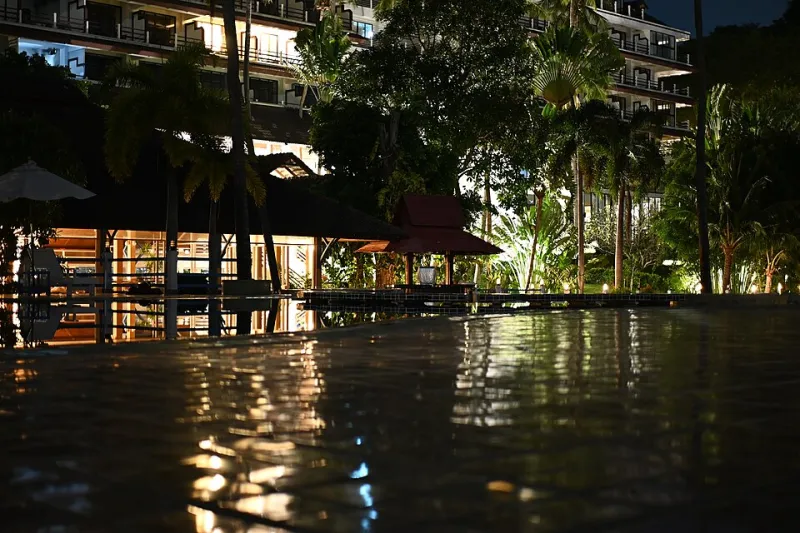
Photo: PattayaPatrol, CC BY-SA 4.0, via Wikimedia Commons
The best pool day I've had at a resort involved a light jacket, a 68-degree morning, and a pool deck with maybe nine people on it.
No chair scramble. No shouting. No one saving six loungers with a single flip-flop at 7 a.m. Just steam rising off the water, a slower bar staff, and the specific luxury of hearing yourself think.
Shoulder season — roughly October through early December, and again from late February through April — is the resort industry's quiet middle. It's also, for a certain kind of traveler, the best value in the entire calendar.
The Crowd Math
Peak summer pricing isn't really about the weather. It's about school calendars. When every family in a three-state radius has the same week off, rates climb and pool decks fill. Shift two weeks in either direction and the whole equation changes: rates soften, upgrade offers appear, and the pool-to-guest ratio swings hard in your favor.
Fewer people means better everything. Shorter bar lines. A lounge chair where you actually want it. Staff with time to talk. A hot tub that isn't a crowded soup of strangers.
What "Heated Pool" Actually Means
Here's where shoulder season gets real, and where you need to ask questions rather than assume.
A heated pool in one resort means 86 degrees and open year-round. At another, it means a heat pump that struggles below 60 degrees, or a policy that quietly keeps the pool closed until Memorial Day weekend. The word on the website tells you almost nothing.
When you're booking a shoulder-season stay in 2026, ask directly:
- What is the water temperature maintained at, and is it checked daily? Anything in the 82–86°F range is comfortable for lounging and casual swimming.
- Is the pool heated year-round, or only on a seasonal schedule? Get the exact dates.
- Is every pool heated, or just one? Resorts with multiple pools often heat the main one and leave the quiet one cold.
- What happens if the heater fails? Better resorts have a backup and a compensation policy. Ask.
- Are the outdoor bars, cabanas, and towel service open? Poolside amenities shrink in the off-season, sometimes without notice.
- Is there an indoor or covered option in case the weather turns?
A resort that answers these questions clearly in an email is a resort that runs a tight operation. Vague answers are information too.
Daylight Is the Real Constraint
Shoulder-season days are shorter, and that changes your pool-day rhythm. Sunset at 5 p.m. means the good light ends earlier, the water cools faster once the sun drops, and the deck empties in a hurry.
Plan around it:
- Start earlier than you would in summer. 9:30 a.m. is prime time, not 11.
- Front-load the swimming. Do the water in the warmest window, roughly 11 to 3.
- Book dinner earlier. You'll be hungrier than you expect after a cool-weather swim.
- Check sunrise and sunset for your specific dates, not just the month. A late-October week and a mid-November week are meaningfully different.
What You Give Up
Honesty time. Shoulder season is not summer with fewer people.
You may get a gray day. The air might be too cool for lingering in a wet swimsuit. Some resort restaurants cut hours, the kids' club may be weekends-only, and the poolside DJ is definitely not happening. If your ideal vacation is a 90-degree afternoon with a frozen drink in each hand, book in July and pay for it.
What you gain instead is a different mood. Cool air over warm water is one of the great sensory pleasures, and it pairs well with a book, a long soak, and a deck that isn't competing for anything.
How to Book It Right
A few practical moves:
- Call or email the property directly. Ask the heater questions above. Save the response.
- Book flexible. Shoulder-season weather is genuinely variable, and a refundable rate is worth the small premium.
- Pack for two seasons. Swimsuits and a warm layer, sandals and socks. You'll use all of it.
- Ask about midweek. Tuesday to Thursday is the softest part of the softest season, and the pool deck proves it.
- Check the events calendar. A shoulder-season convention or a local festival can fill a hotel that's otherwise empty.
The pitch is simple: a shoulder-season pool day asks you to plan a little harder and expect a little less from the sun. In exchange, it hands you the version of a resort that most guests never see — calm, unhurried, and priced like someone's doing you a favor.