What's Actually in Your Resort Pool? A Friendly Breakdown of Water Chemistry for Swimmers
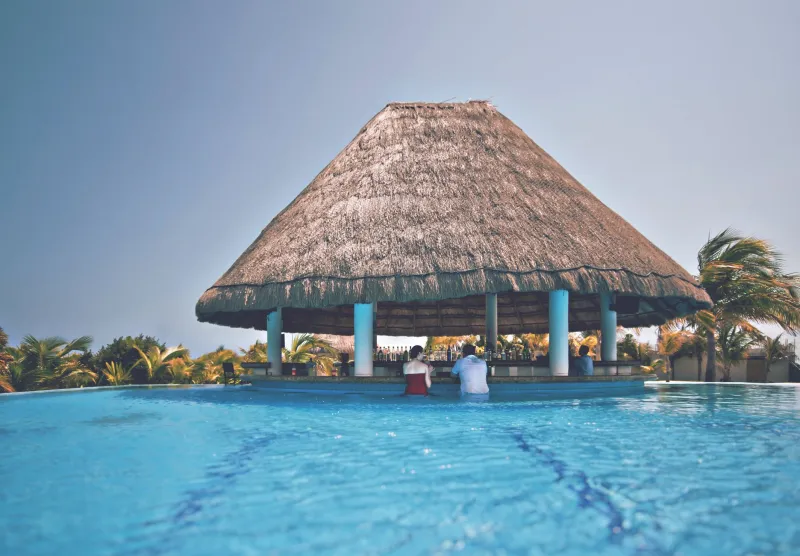
Let's be honest — most of us don't think twice before jumping into a resort pool. The water looks clear, it smells faintly of chlorine, and that's good enough, right? Well, sort of. The reality is that keeping a resort pool safe and inviting involves a surprisingly intricate balancing act happening behind the scenes, around the clock.
At Shiroyama Pool & Resort, water quality isn't just a checkbox on a maintenance form. It's something we take seriously every single day. And we think our guests deserve to understand exactly what goes into the water they're swimming in. So let's break it down — no chemistry degree required.
Why Pool Chemistry Even Matters
Think of pool water like a living system. Leave it alone and it quickly becomes a breeding ground for bacteria, algae, and other stuff you definitely don't want to swim through. The chemicals used in pool maintenance aren't just there to make the water look pretty — they're actively working to neutralize harmful microorganisms and keep the environment safe for everyone from toddlers to grandparents.
When the chemistry is off, even slightly, swimmers can experience red eyes, irritated skin, or worse. On the flip side, a well-maintained pool is gentle on your body and genuinely refreshing. That's the sweet spot every resort pool should be hitting.
Chlorine: The Heavy Lifter
Chlorine is probably the first thing that comes to mind when you think about pool maintenance, and for good reason — it's the primary sanitizer used in most pools across the US. Its job is to kill bacteria and other pathogens that enter the water from swimmers' bodies (think sunscreen, sweat, and everything else we bring into the pool with us).
But here's where it gets interesting: there are actually two forms of chlorine working in your pool at any given time. Free chlorine is the active form that's out there doing the hard work of disinfecting. Combined chlorine is what's left over after free chlorine has already reacted with contaminants. High levels of combined chlorine — technically called chloramines — are actually what cause that strong pool smell and eye irritation that people often blame on too much chlorine. In reality, that smell is usually a sign the pool needs more free chlorine to clean things up.
The ideal free chlorine range for a resort pool sits between 1 and 3 parts per million (ppm). At Shiroyama, our team tests levels multiple times a day to make sure we're always in that range.
pH Balance: The Unsung Hero
If chlorine is the heavy lifter, pH balance is the silent partner that makes everything work. pH measures how acidic or basic the water is on a scale of 0 to 14, with 7 being perfectly neutral. For swimming pools, the sweet spot is between 7.2 and 7.8 — slightly alkaline, which happens to be very close to the natural pH of the human eye. That's why properly balanced water doesn't sting.
When pH dips too low (acidic), chlorine becomes overly aggressive and can corrode pool equipment, irritate skin, and degrade swimwear faster than you'd expect. When it swings too high (too alkaline), chlorine loses its effectiveness as a sanitizer — meaning the water might look fine but isn't actually being properly cleaned. Maintaining pH is a constant juggling act, especially in a busy resort environment where dozens or hundreds of swimmers are adding their own chemistry to the mix throughout the day.
Total Alkalinity and Calcium Hardness
These two factors don't get as much spotlight, but they're critical to keeping everything else stable.
Total alkalinity acts as a buffer for pH, preventing it from swinging wildly in either direction. When alkalinity is properly maintained (usually between 80 and 120 ppm), pH stays more predictable and easier to manage.
Calcium hardness refers to how much dissolved calcium is in the water. Too little and the water becomes "hungry" — it'll start pulling calcium from pool surfaces, leading to pitting and surface damage over time. Too much and you get cloudy water and scale buildup on tile and equipment. The target range is generally 200 to 400 ppm, though this can vary depending on the type of pool.
Filtration: The Workhorse You Never See
Chemicals alone can't do everything. Filtration systems are responsible for physically removing debris, dead algae, and other particles from the water. Most resort pools use one of three types of filters: sand, cartridge, or diatomaceous earth (DE).
Sand filters are the most common and are great for high-traffic environments. Cartridge filters are easier to maintain and capture finer particles. DE filters offer the finest filtration of the three, capturing particles as small as 2-5 microns — that's incredibly small. At a busy resort, filtration systems typically run continuously, cycling all the water through the filter multiple times per day.
Backwashing (essentially flushing the filter clean) is done regularly to keep filtration efficiency high. It's one of those behind-the-scenes tasks that guests never see but absolutely feel the difference when it's done right.
Saltwater Pools: A Growing Alternative
You may have noticed that more and more resorts — including some of our specialty pools here at Shiroyama — are moving toward saltwater systems. These are often marketed as "chlorine-free," which is a little misleading. Saltwater pools actually do use chlorine; they just generate it on-site through a process called electrolysis, where a salt cell converts dissolved salt into chlorine automatically.
The result? Softer-feeling water, more consistent chlorine levels, and less of that sharp chemical smell. Many guests find saltwater pools gentler on their skin and eyes. The salt concentration is also far lower than ocean water — about one-tenth — so it's not salty in any noticeable way. It's a technology we're genuinely excited about as it continues to evolve.
What You Can Do as a Guest
Here's the thing — pool chemistry isn't just the resort's responsibility. Guests play a role too. A few simple habits make a real difference:
- Shower before you swim. It sounds basic, but rinsing off sunscreen, sweat, and other residues before entering the pool significantly reduces the chemical demand on the water.
- Avoid swimming when you're sick. Certain illnesses can spread through pool water even in properly treated pools.
- Don't bring food or drinks into the pool. Beyond the obvious mess, organic matter disrupts water chemistry.
- Let us know if something seems off. If the water looks cloudy, smells unusually strong, or causes irritation, tell a staff member. We'd always rather investigate than have guests uncomfortable.
Transparency Is Part of the Experience
At Shiroyama Pool & Resort, we believe that an informed guest is a happy guest. Understanding what goes into maintaining a safe, beautiful pool environment isn't just trivia — it's part of what makes your time here feel genuinely worry-free. The next time you slide into the water and feel that cool, clean refresh, you'll know exactly what went into making that moment possible.
Now go enjoy the pool. You've earned it.